

World City Prize Favors Capital Metropolitan Area | ICS Surveys Beijing-Tianjin "Eco+" Cit
World City Prize Favors Capital Metropolitan Area | ICS Surveys Beijing-Tianjin "Eco+" City Model
Preface:
Pioneering the Path for a Modernized Capital Metropolitan Area
The Modernized Capital Metropolitan Area Spatial Coordination Plan (2023–2035) is a document jointly developed by the three regions of Beijing, Tianjin, and Hebei, and was approved by the Central Committee of the Communist Party of China and the State Council on January 22, 2026. The full text of the plan was released on February 3.
The "Capital Metropolitan Area" officially entered the global spotlight, aiming to become a world-class metropolitan region and urban cluster, leading the coordinated development of the Beijing-Tianjin-Hebei region and the implementation of the 15th Five-Year Plan.
With the goal of high-quality development for the Capital Metropolitan Area, the International City Strategic Development &Cooperation Center (ICS), together with experts from think tanks and policy circles in the fields of internationalization, urbanization, and sustainable development, has launched a case study, survey, and advocacy campaign titled "Pioneering the Path for a Modernized Capital Metropolitan Area."
The first stop of the "Pioneering the Capital Metropolitan Area" survey, led by the ICS and the Global SMILE Cities Expert Committee, visited Tianjin, a city that has just received a special mention for the Lee Kuan Yew World City Prize. The survey focused on Ninghe District's "Eco+" innovation model, the sustainable development of the Sino-Singapore Tianjin Eco-City, Tianjin Five Avenues Historical and Cultural Zone, the Italian-style district, and the green mobility urban network.
From March 30 to April 1, a delegation led by Qin Gang, Director-General of the ICS and Senior Research Fellow at the International Information Research Institute of the State Information Center, conducted field research in Ninghe District, the Sino-Singapore Tianjin Eco-City, and the historic and cultural districts of Tianjin's urban core. The delegation inspected "Eco+" demonstration projects, including the Qilihai Wetland, a cultural, sports, and tourism integration zone, Ninghe Agricultural Industrial Park, Lutaichun Cultural and Creative Industrial Park (Lutaichun Wine Museum), and Lutai Grand Market, as well as the National Maritime Museum of China, Sino-Singapore Smart Manufacturing Park, Sino-Singapore Entrepreneurship Park, Wudadao Cultural Tourism Zone, and the Tianjin Urban Planning Exhibition Hall.
Hui Bing, Mayor of Ninghe District, Zhao Dongya, Deputy Mayor of Ninghe District, and heads of the Ninghe District Development and Reform Commission, Urban Management Commission, Ecology and Environment Bureau, and Qilihai Management Committee held talks with the delegation.
Covering an area of 1,296 square kilometers, Ninghe District is located at the geometric center of Beijing, Tianjin, and Tangshan. It is home to one of the world's three ancient coastal wetlands: Qilihai. Together with the Sino-Singapore Tianjin Eco-City built on saline-alkali land, Qilihai Wetland has provided Tianjin, a Lee Kuan Yew World City Prize special mention city of 2026, with an exceptional ecological foundation and practical case studies. The ICS delegation found that the "Eco+" development strategy has brought rich application scenarios and added ecological value to Ninghe's "agriculture, sports, culture, commerce, education, and tourism" industrial chain.
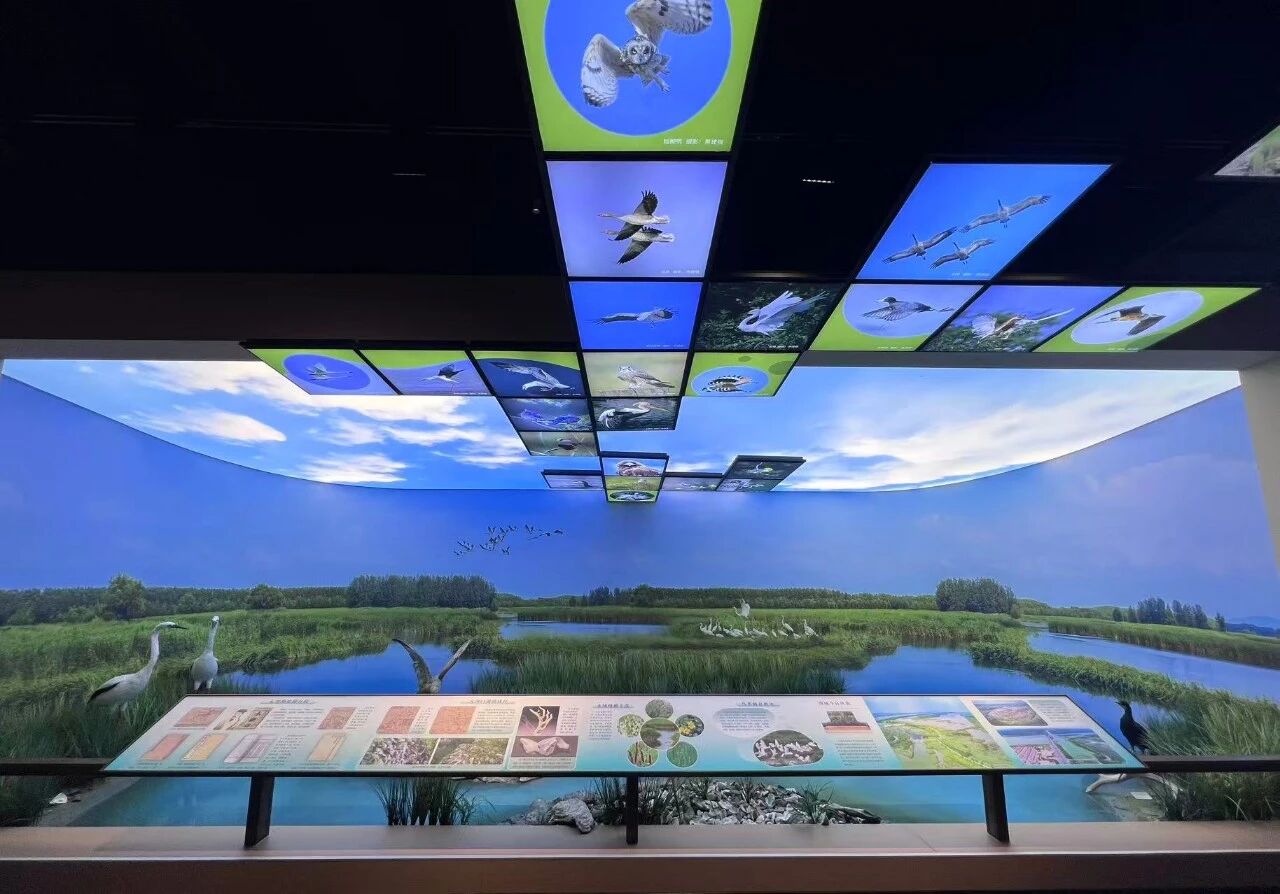
At the Qilihai Wetland Nature Reserve, the delegation experienced the area's superior ecological conditions and human-centered ecological governance mechanisms. Li Xingliang, Director of the Ninghe District Ecology and Environment Bureau, introduced the protection measures combining drones, the internet, and manual inspections, as well as the coordinated mechanism for comprehensive ecological and environmental management.
Ninghe is the only demonstration zone in Tianjin with national-level breeding farms for planting, animal husbandry, and aquaculture, forming a "5+N" specialty seed industry encompassing rice, pigs, crabs, and seedlings. Ninghe District has built a demonstration zone for the integrated development of agriculture, culture, and tourism, creating six routes: Qilihai study tours, agricultural and forestry green screens, rice fragrance sightseeing, canal water towns, folk culture, and dreamlike Jiyun Canal excursions.
At the Ninghe Agricultural Zone, Yang Lijing, Chairwoman of Ninghe Agricultural Development Group, explained to the delegation the brand matrix under the "Jingu Qilihai" umbrella, including brand products and industrial chain development cases such as "Jingu Ninghe Rice (Xiaozhan Rice)," "Qilihai River Crabs," "Yuelong Hongyao Sweet Potatoes," "Tianhe Breeding Pigs," and "Huanxin Freshwater Fish."
The Lutaichun Cultural Museum is a corporate museum focusing on Tianjin's modern history, industrial and commercial development, and Chinese liquor culture. Its rich historical materials and modern exhibition layout fully showcase Tianjin's contributions to China's modernization and its status as a Ocean city.
Liu Chunxin, Chairman of Ninghe Economic Development Zone, introduced the development plans for the zone and the Lutaichun Cultural and Creative Industrial Park.
Liu Jianxin of Tianjin Wei Liquor Group Lutaichun Company led the delegation into the "Northern Sauce" wine cellar, which houses thousands of tons of raw liquor, and explained the value that "Eco+" has added to Ninghe's local brands and landmark products.
The delegation also visited the Lutai Grand Market, one of the largest folk markets in the Capital Metropolitan Area. Tian Kun, General Manager of Xingning Group, the market's operator, revealed that the market's peak daily foot traffic reached 170,000 people, serving as a convergence point for the coordinated development of Beijing, Tianjin, and Tangshan.
During a symposium, Hui Bing, Mayor of Ninghe District, stated that under the guidance of "Eco+," the integration of "agriculture, sports, culture, commerce, education, and tourism" has created a rich ecosystem and application scenarios, opening new paths for Ninghe's high-quality development. He expressed hope that the ICS International Center for Sustainable Cities and the Global SMILE Cities Expert Committee would leverage their roles as international think tanks and their advantages in global urban networks to focus on Ninghe's practices, providing high-quality consulting for ecological protection, green development, cultural and tourism integration, energy restructuring, asset revitalization, and investment and talent attraction, while introducing international resources to jointly build the brand of "United Nations Biodiversity Charm City."
Postscript:
The Lee Kuan Yew World City Prize is often referred to as the Nobel Prize in urban planning, development, and governance. London is the recipient of the 2026 World City Prize, while Tianjin received a nomination for the 2026 prize.
The ICS International Public Policy Research Team has continuously tracked the policy innovations and governance practices of previous Lee Kuan Yew World City Prize-winning cities, including Bilbao (2010), New York (2012), Suzhou (2014), Medellín (2016), Seoul (2018), Vienna (2020), and Mexico City (2024).
The Lee Kuan Yew World City Prize focuses on four dimensions: urban sustainability, liveability, vibrancy, and quality of life. It aims to recognize outstanding contributions to creating liveable, vibrant, and sustainable cities and communities, rewarding cities and their leaders who address urban challenges with vision, good governance, and innovative thinking, and who achieve overall social, economic, and environmental benefits through holistic approaches and measures.
As a Lee Kuan Yew World City Prize-winning city, Tianjin's high-quality urban development serves as a practical model for cities worldwide. The ICS will continue to conduct in-depth research on the exploration and innovation of the "Eco+" development model within the modernized Capital Metropolitan Area.
About ICS
With mission of "international vision, strategic leadership, city cooperation, and sustainable development," ICS(International City Strategic Development&Cooperation Center) supports global cities in implementing “global development, security, civilization, and governance initiatives”. It is a Chinese-characteristic new think tank with international organization functions.
ICS was established in Beijing in 2020 and was approved for establishment in Hong Kong by the Registrar of the Hong Kong Special Administrative Region Government in 2025. It transitioned from an academic research institution to an international organization-type think tank, with offices in Beijing, Shanghai, Hong Kong, New York, London, and Johannesburg.
ICS envisions a modernized people's city development with a focus on "innovation-driven, smart empowerment, ecological friendliness, resilience protection, poetic habitation, and cultural mutual learning," thereby pioneering a new domain of "global city studies" and constructing globalized, modernized cities, supporting the construction of international consumption center,international cultural center, international innovation center and international exchange center.
The ICS Advisory Committee and Council consist of 100 prominent mayors around the world, international figures, scholars, entrepreneurs, and artists. The governing bodies are the Council and the Secretariat; the research institution is the Academic Committee.